A demanding installation campaign is underway on the first offshore wind farm in Polish waters of the Baltic Sea, involving more than 80 specialized vessels. This is the first project of its kind in Poland and the first logistical operation of this scale.
WORKS AT SEA
A demanding installation campaign is underway on the first offshore wind farm in Polish waters of the Baltic Sea, involving more than 80 specialized vessels. This is the first project of its kind in Poland and the first logistical operation of this scale.
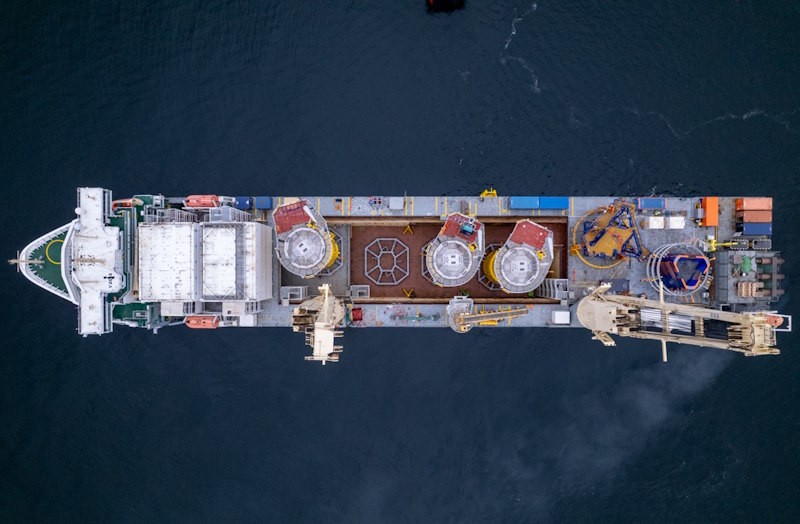
The Baltic Power offshore construction site covers an area of about 130 km². Operating there are floating cranes, jack-up vessels, tugs, environmental monitoring ships, guard vessels, and fast, lightweight crew transfer vessels.
2025 was a breakthrough year for the Baltic Power project.
In January, we installed the first foundations (monopiles).
Across the Baltic Power farm area, we are installing 78 monopiles - steel structures up to 100 m long, weighing up to 1,700 tons, and with a diameter of over 9 m (larger than a metro tunnel). Monopiles are driven into the seabed by a floating installation crane, which hammers them into the seabed at depths of about 40 meters.
Alongside the installation crane, a dozen other vessels operate simultaneously: support units, tugs, crew and equipment transport ships, environmental monitoring vessels, and guard units.
Noise mitigation systems are used during monopile installation to reduce underwater noise and its impact on the ecosystem. The most common solution is bubble curtains, which create a barrier, reducing the spread of acoustic waves in water. Another solution is the so-called “sock” mounted on the vessel - an elastic cover surrounding the monopile during installation to dampen noise at the source.
In April, we installed the first transition pieces connecting foundations with turbines.
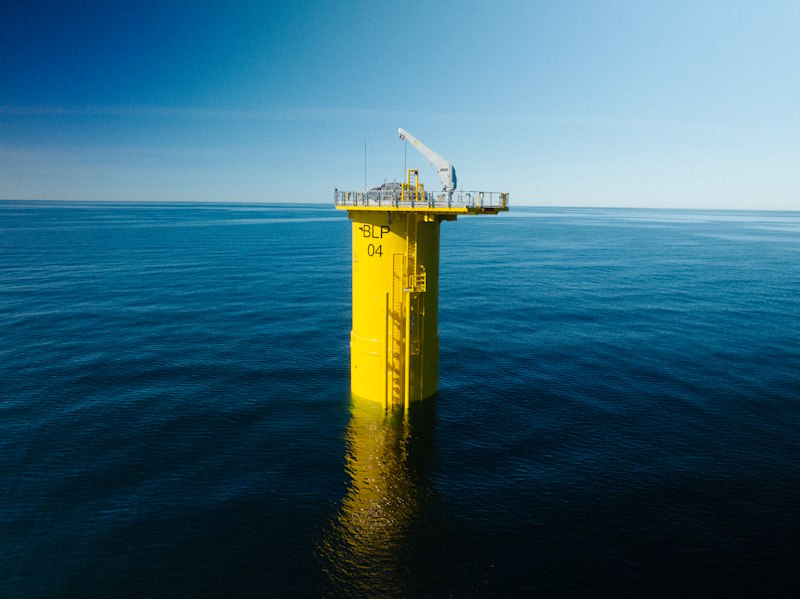
Transition pieces (TPs) are steel structures that link monopile foundations with offshore wind turbine towers and offshore substations. Each weighs up to 350 tons and measures over 20 meters.
Smulders is the supplier of transition pieces for turbines in the Baltic Power project. Most secondary steel components for TPs were manufactured in Żary, Niemodlin, and Łęknica.
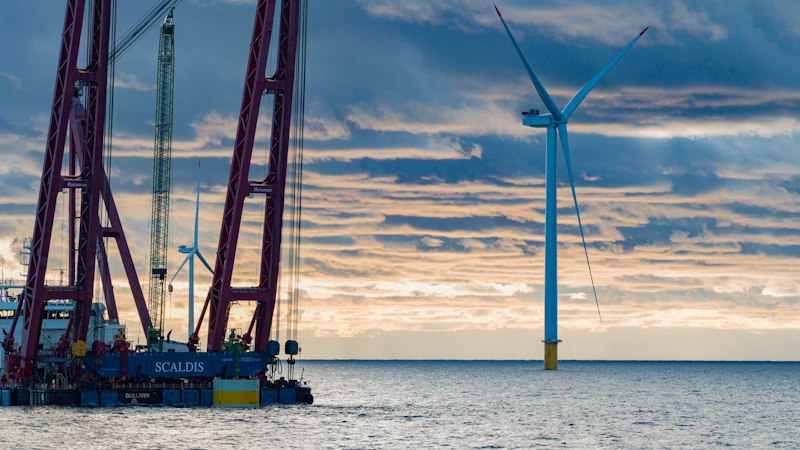
Van Oord is responsible for coordinating the transport and installation of TPs. The floating crane LONE from the SAL fleet, used for this task, is 160 meters long and equipped with two cranes with a lifting capacity of 1,000 tons each. Thanks to the dynamic positioning system (DP2), the vessel maintains its position regardless of sea conditions. During the installation campaign, it is supported by crew transfer vessels (CTVs).
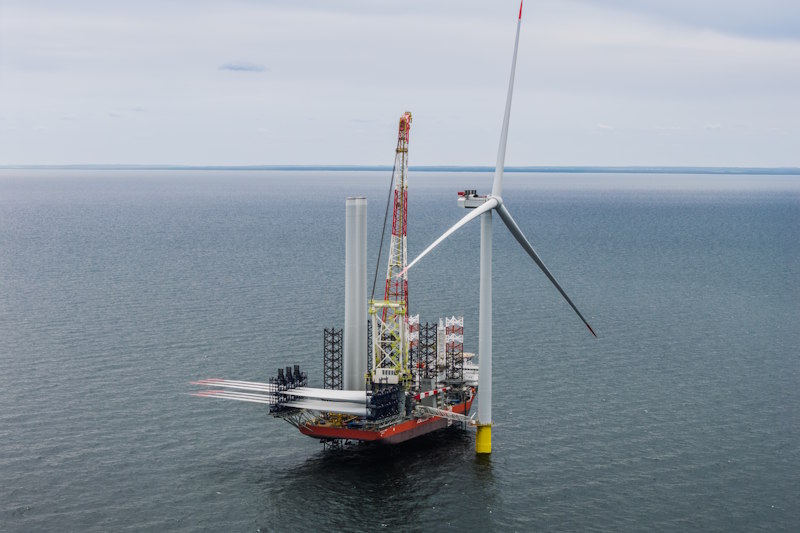
In July, the first offshore wind turbine was installed in the Polish part of the Baltic Sea.
Baltic Power will be only the second wind farm in Europe to use 15 MW turbines. The V236-15 turbines are manufactured by Danish company Vestas. The blades measure about 115 m and sweep an area of over 43,700 m² (equivalent to more than six football fields). Tower height exceeds 120 m, and the total turbine height with foundations reaches 260 m. The nacelles, which are the size of a three-story house, are installed on the towers. Some nacelles in the Baltic Power project were produced at Vestas’ new factory in Szczecin.
Cadeler was selected as the contractor for turbine transport and installation. The installation work will be carried out by the jack-up vessel O Wind OSPREY, over 160 m long. With a loading capacity of up to 11,000 tons, the vessel can transport three complete turbines consisting of tower sections, nacelles, and blades.
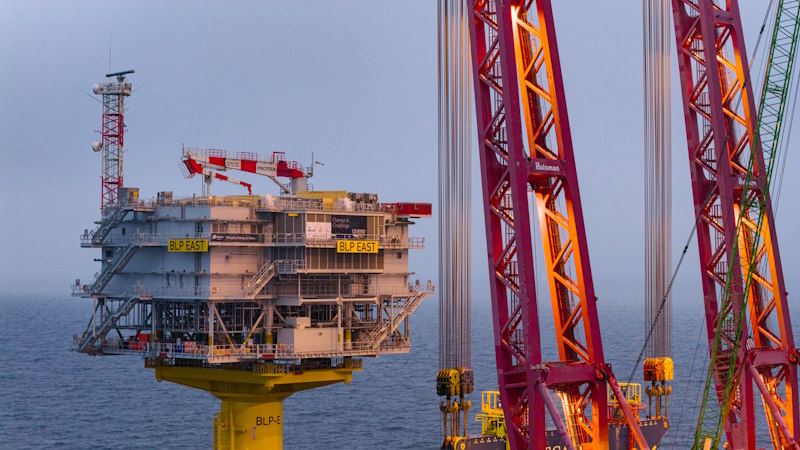
In October, two “beating hearts of the offshore wind farm”—electrical substations—were successfully installed. They will collect energy from 76 turbines and transmit it to shore.
The main contractor for our offshore substations was a consortium of CS Wind Offshore and Semco Maritime, supported by several Polish companies. The full steel structures were built in Poland—in shipyards in Gdynia and Gdańsk—by Grupa Przemysłowa Baltic. Each of these structure weighed 1,300 tons before being shipped to Denmark for full outfitting, reaching 2,500 tons each.
This installation campaign included installing the substations together with transition pieces connecting them to the foundations (for turbines, this is done in a separate campaign by a different set of vessels). Transition pieces for substations are also significantly larger. Key installation tasks included precise lifting of transition pieces and steel structures and placing them on monopile foundations. This complex operation, carried out by a specialized floating crane, was supported by tugs, barges, and crew transport vessels (CTV and SOV).
In February 2026, Baltic Power completed the installation of all monopiles, and in March the last transition piece was installed.
The installation of turbines as well as export and inter‑array cables is ongoing. Completion of the offshore installation campaign is expected in 2026.
WORKS ON LAND
Enprom, in consortium with GE Vernova, is responsible for building the onshore substation in Choczewo municipality. Work began in May 2023.
SERVICE BASE IN ŁEBA
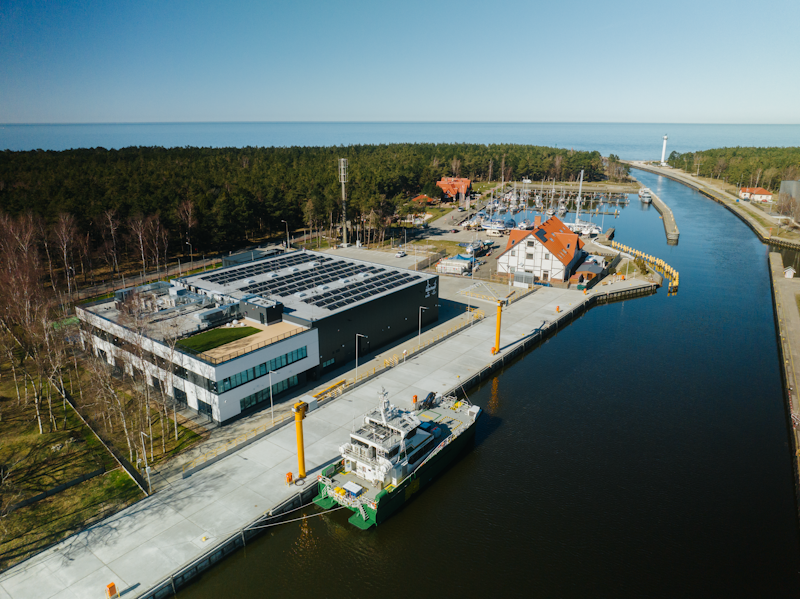
In April 2025, we launched the operations and maintenance base in Łeba. Construction began in January 2024, with Erbud acting as the general contractor. Building the base was an ambitious logistical undertaking. The existing quay and promenade were adapted for full-scale offshore wind infrastructure. About 200 micropiles were installed, and the quay was deepened by one meter, allowing simultaneous mooring of up to four crew and equipment transport vessels.
The Łeba base consists of three parts: a quay with cranes capable of servicing up to four CTV crew transfer vessels, spare parts warehouses with workshops, office spaces and technical facilities.
For about 30 years of Baltic Power’s operation, the base will serve as the service center and home port for vessels transporting technicians to the farm. Around 70 people will be employed here. Currently, the base supports the offshore installation campaign. The Baltic Power Marine Coordination Center (MCC) operates from here 24/7.